A Nation’s Code Assembled from Fragments
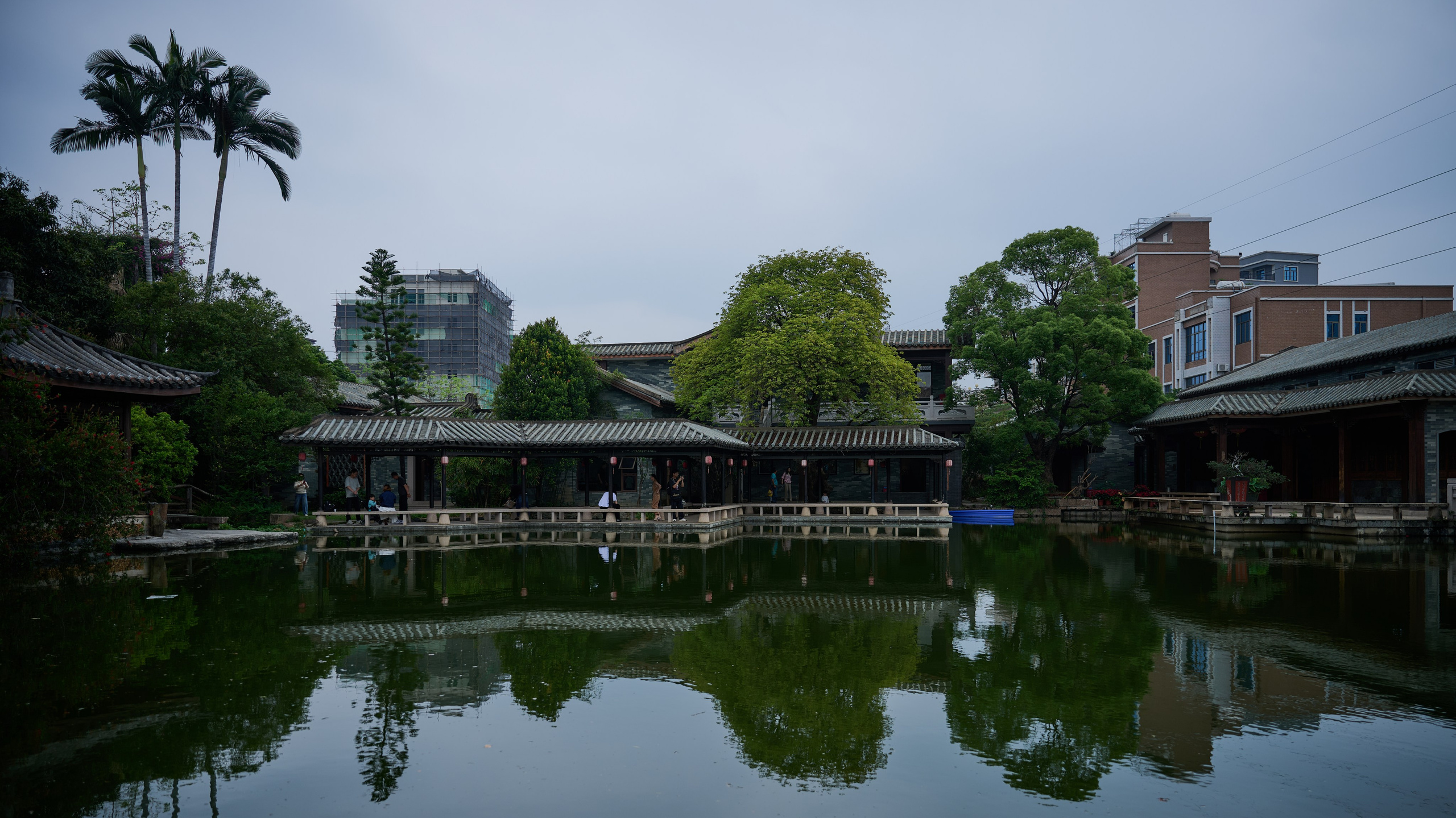
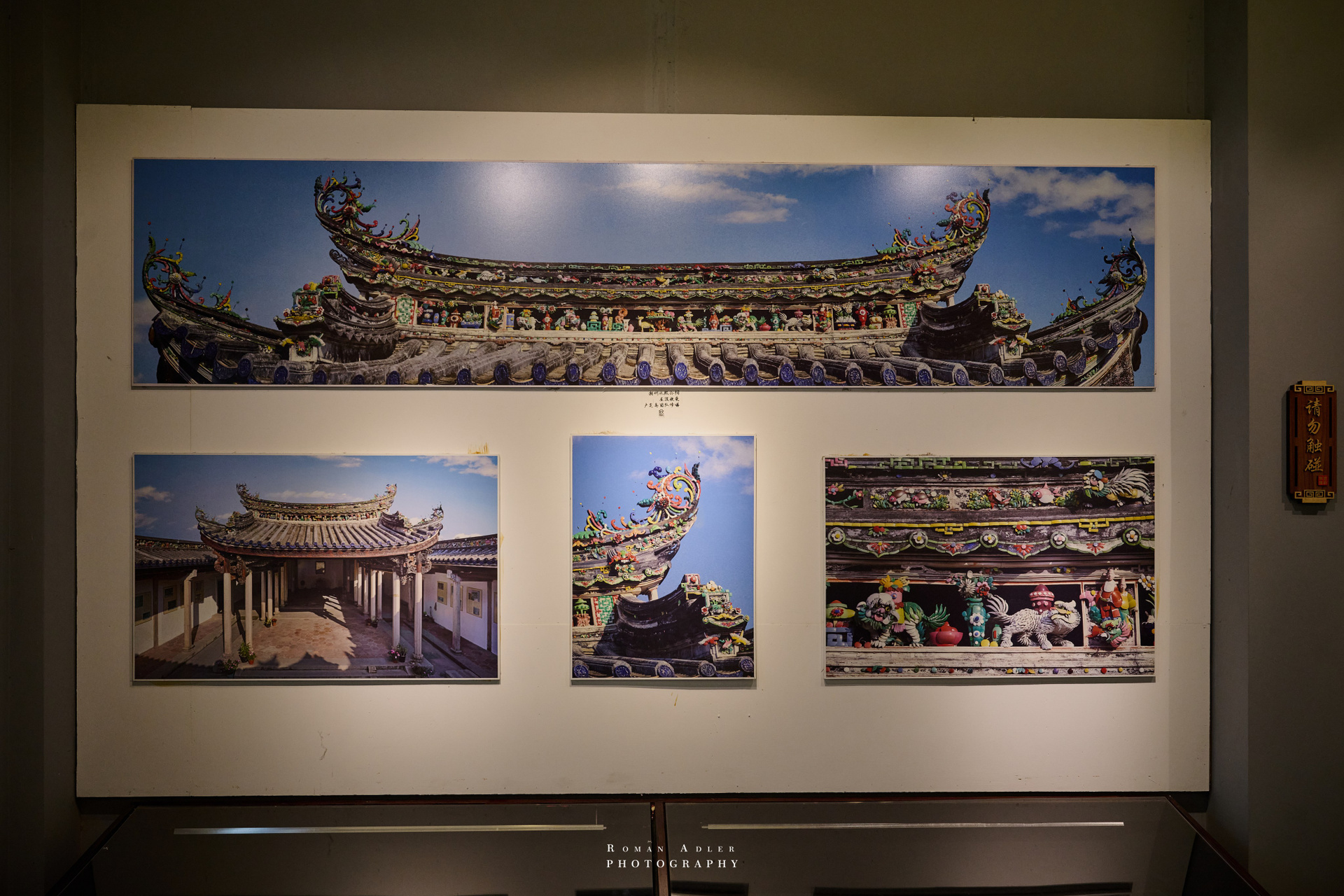
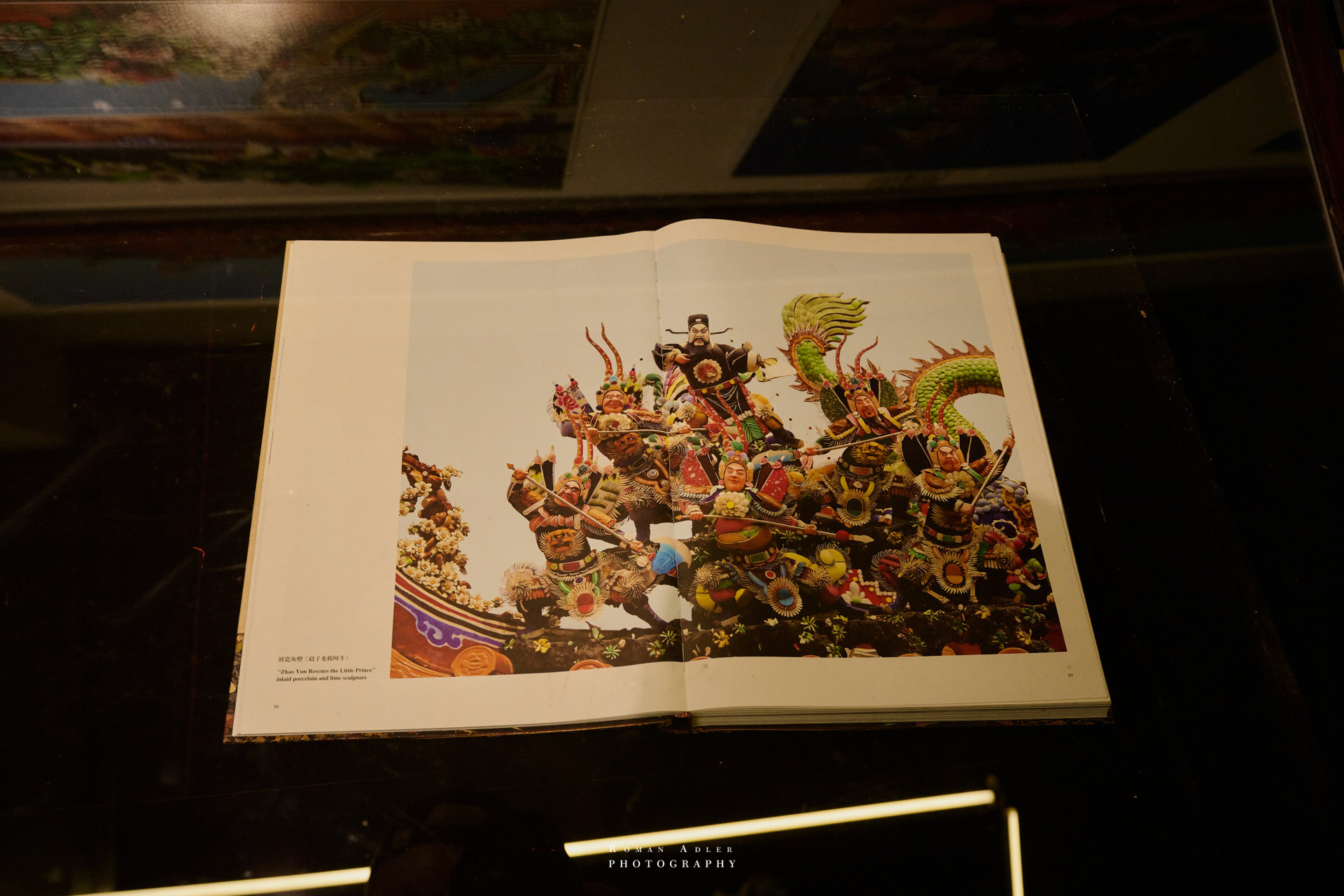
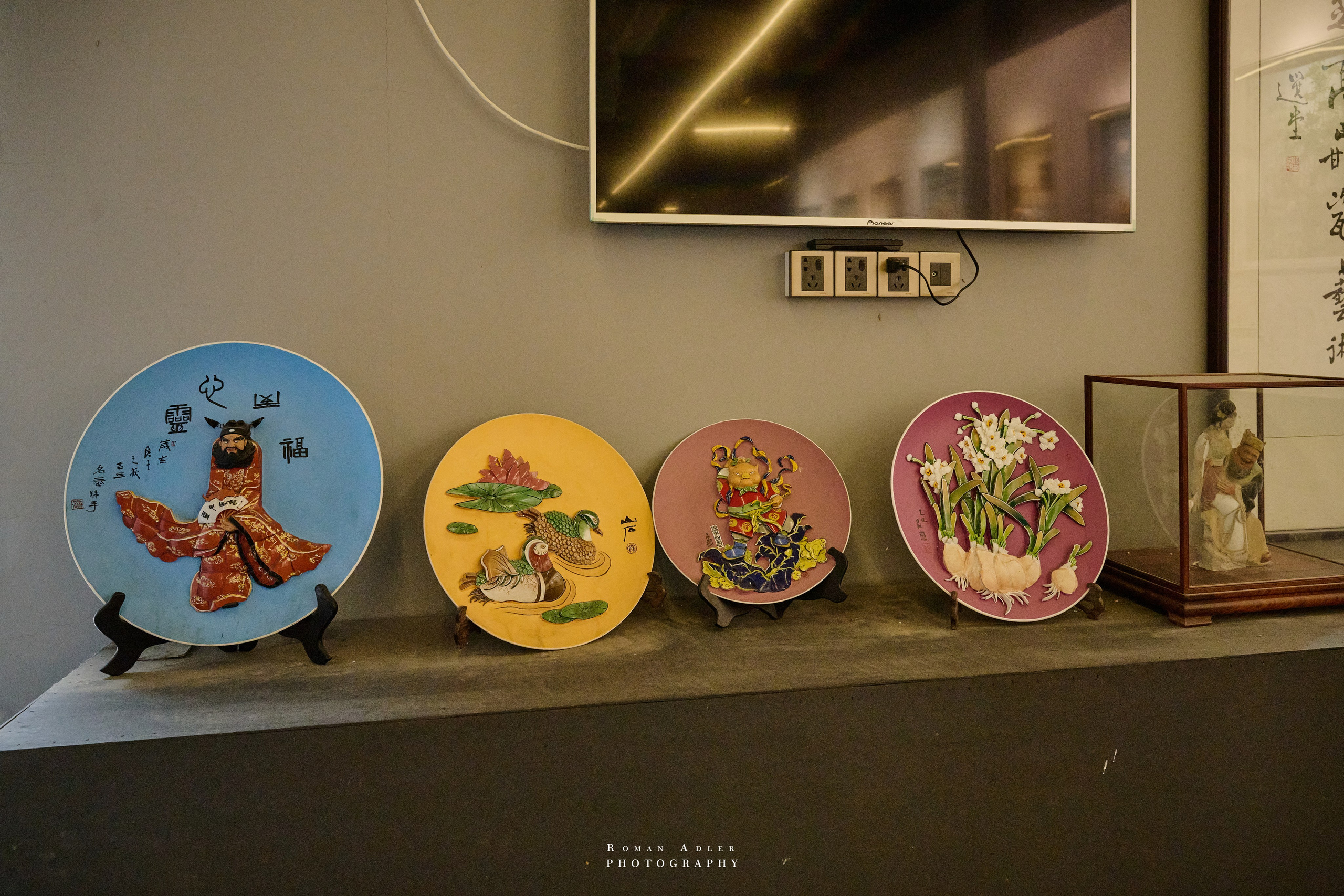
In the Chaoshan region of eastern Guangdong, they say: “Every rooftop corner holds a whole theater.” Raise your head by an old temple, an ancestral hall, or a wealthy mansion, and you’ll see a stage: battles of heroes, trysts of beauties, soaring dragons and phoenixes. This is not stucco and not painting. This is inlaid porcelain (嵌瓷, qianci) — a technique more than four centuries old, and one that still barely leaves its native corner of the world.
But to me, this museum is not simply a place where beautiful things are kept. It is another chapter in the same conversation as the Chen Clan Ancestral Hall: about how a culture holds on to its wholeness when the outward scenery crumbles. And about a man who decided that his ancestors' craft must not die.
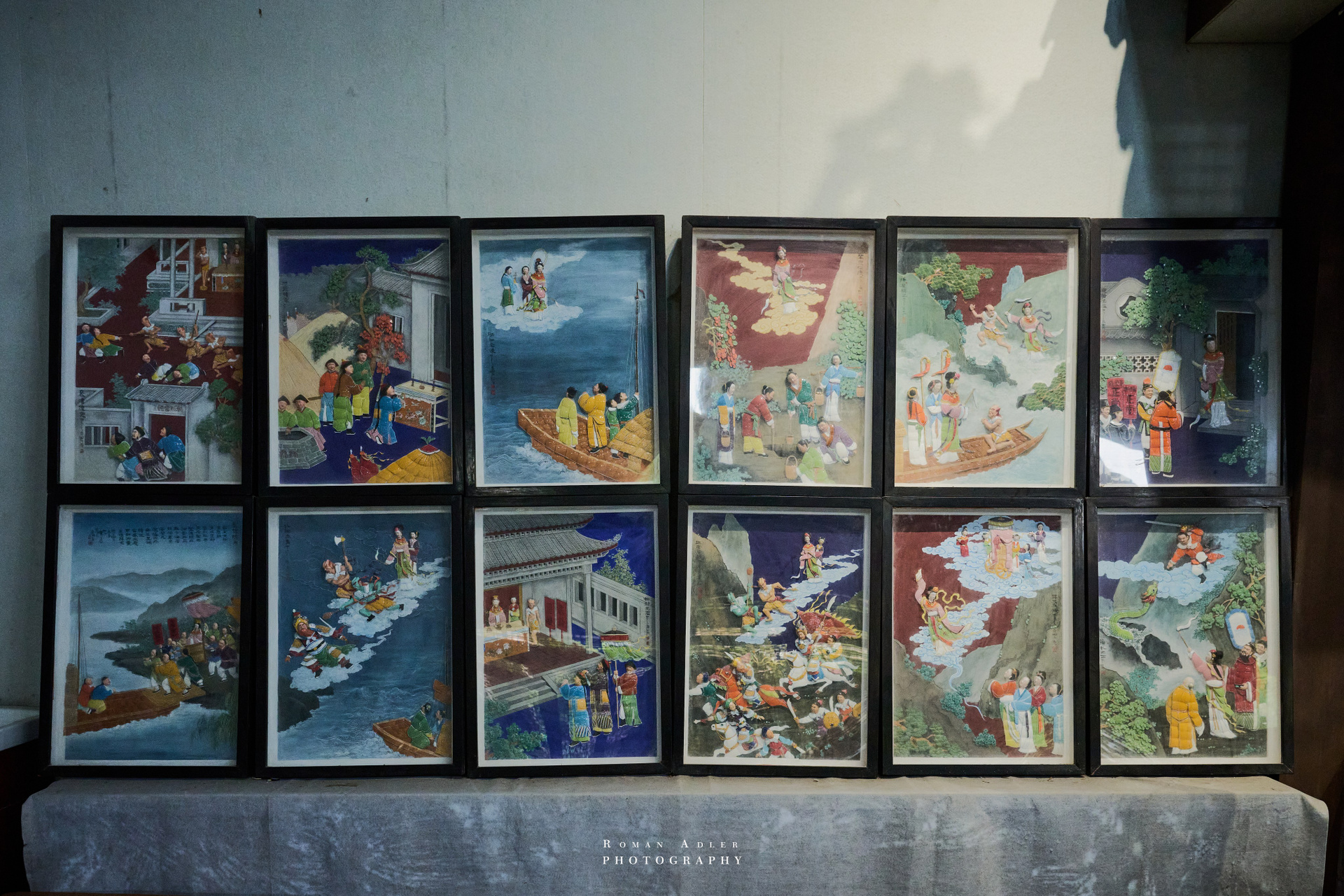
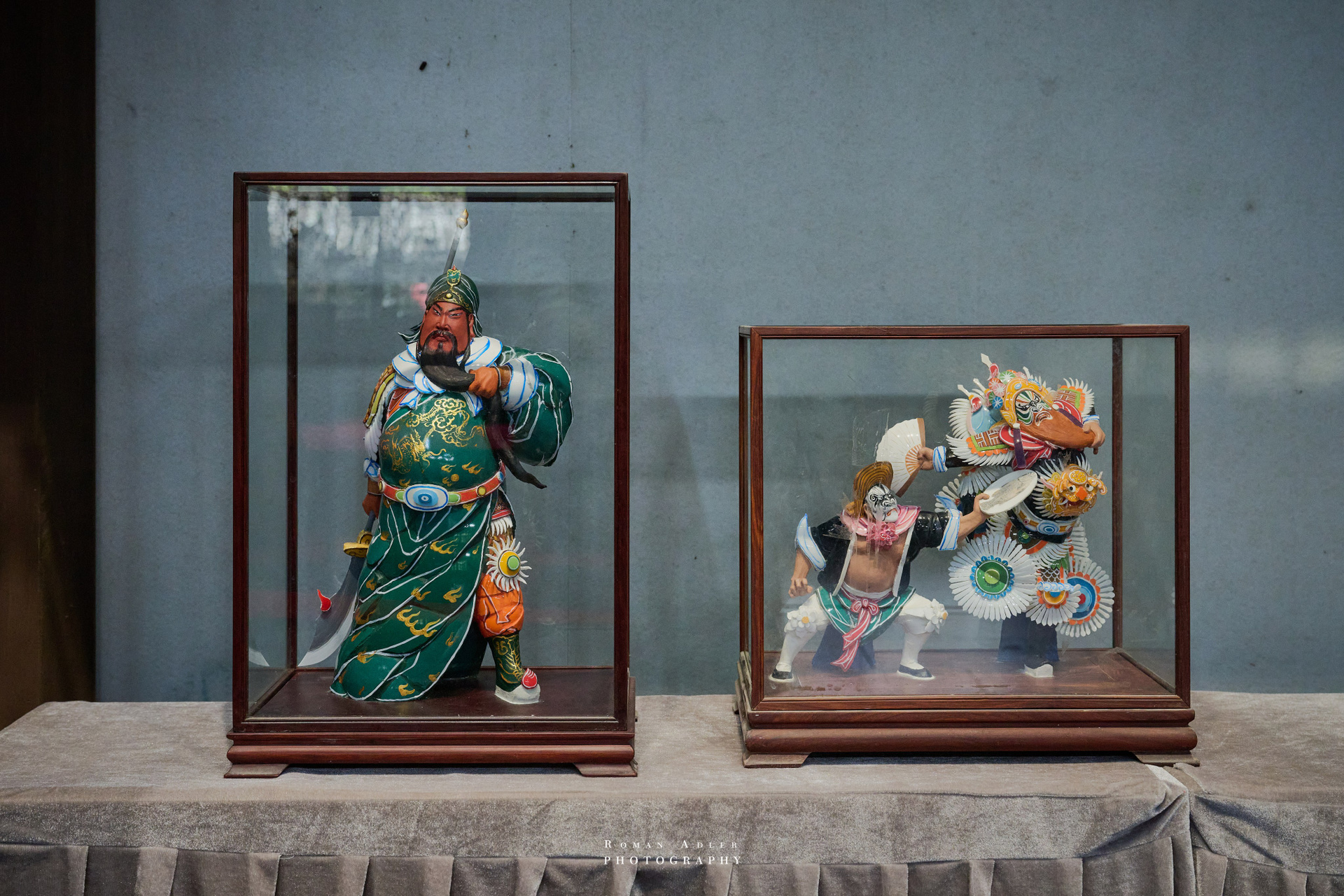
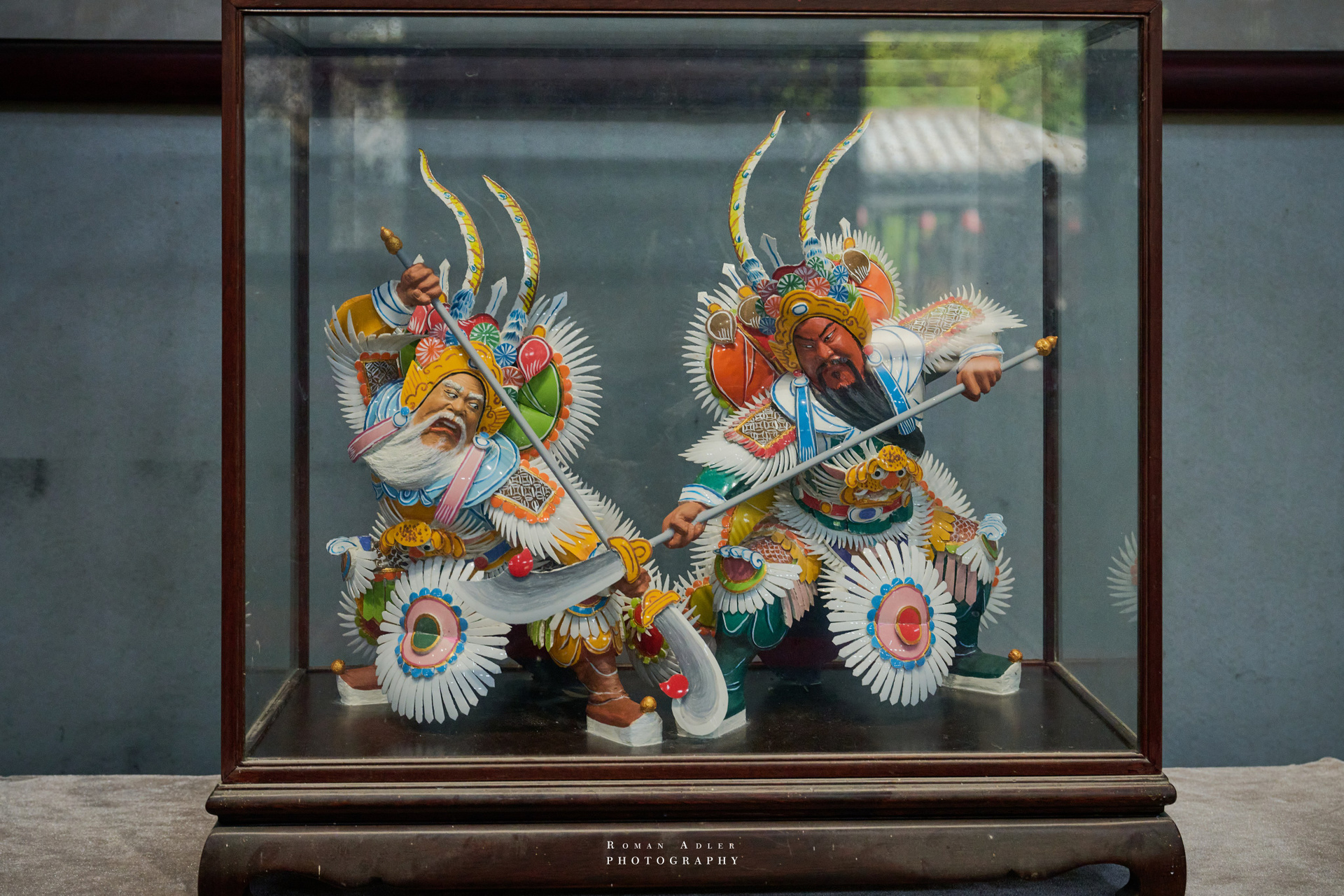
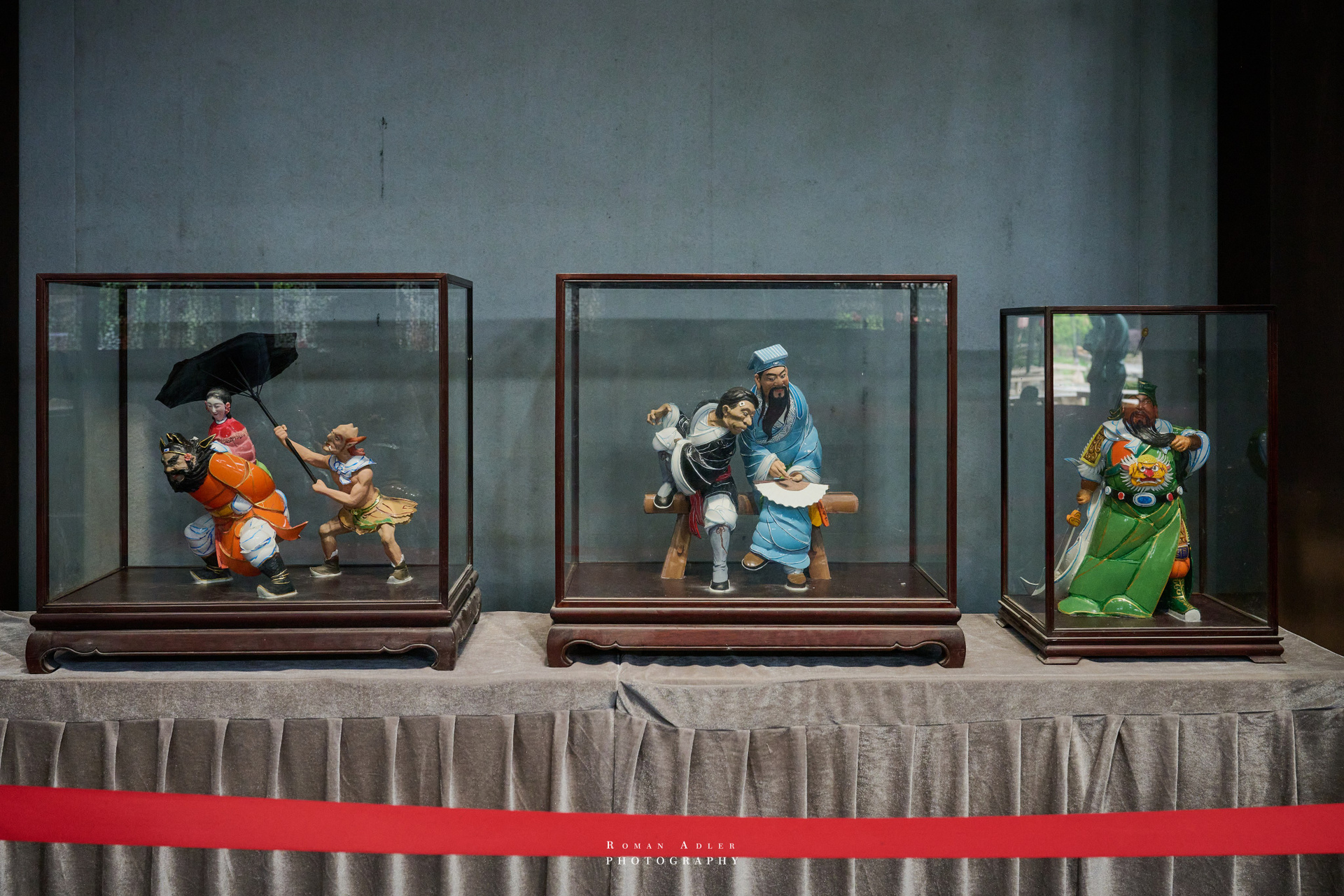
The Man Who Brought Art Down from the Heavens
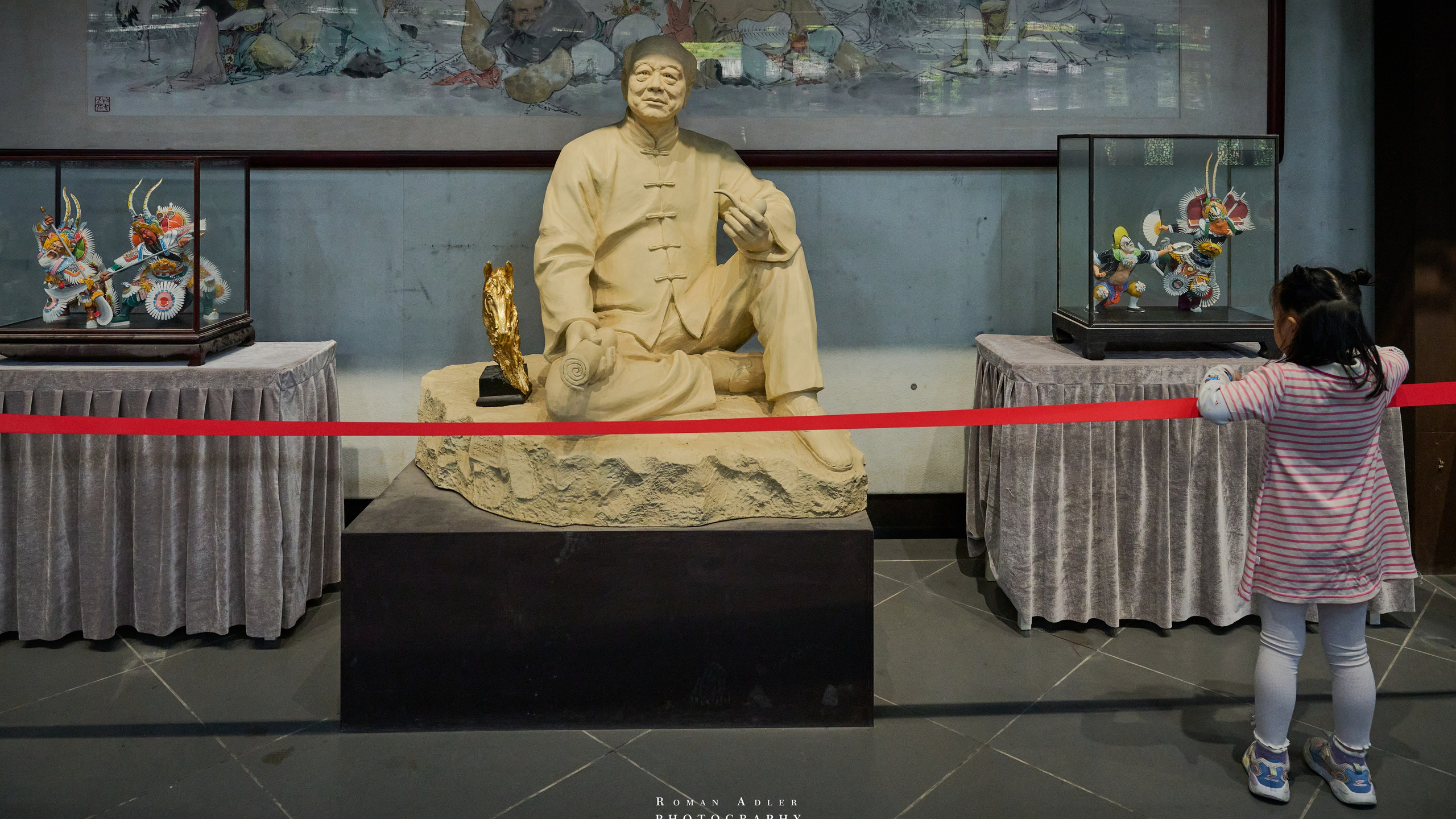
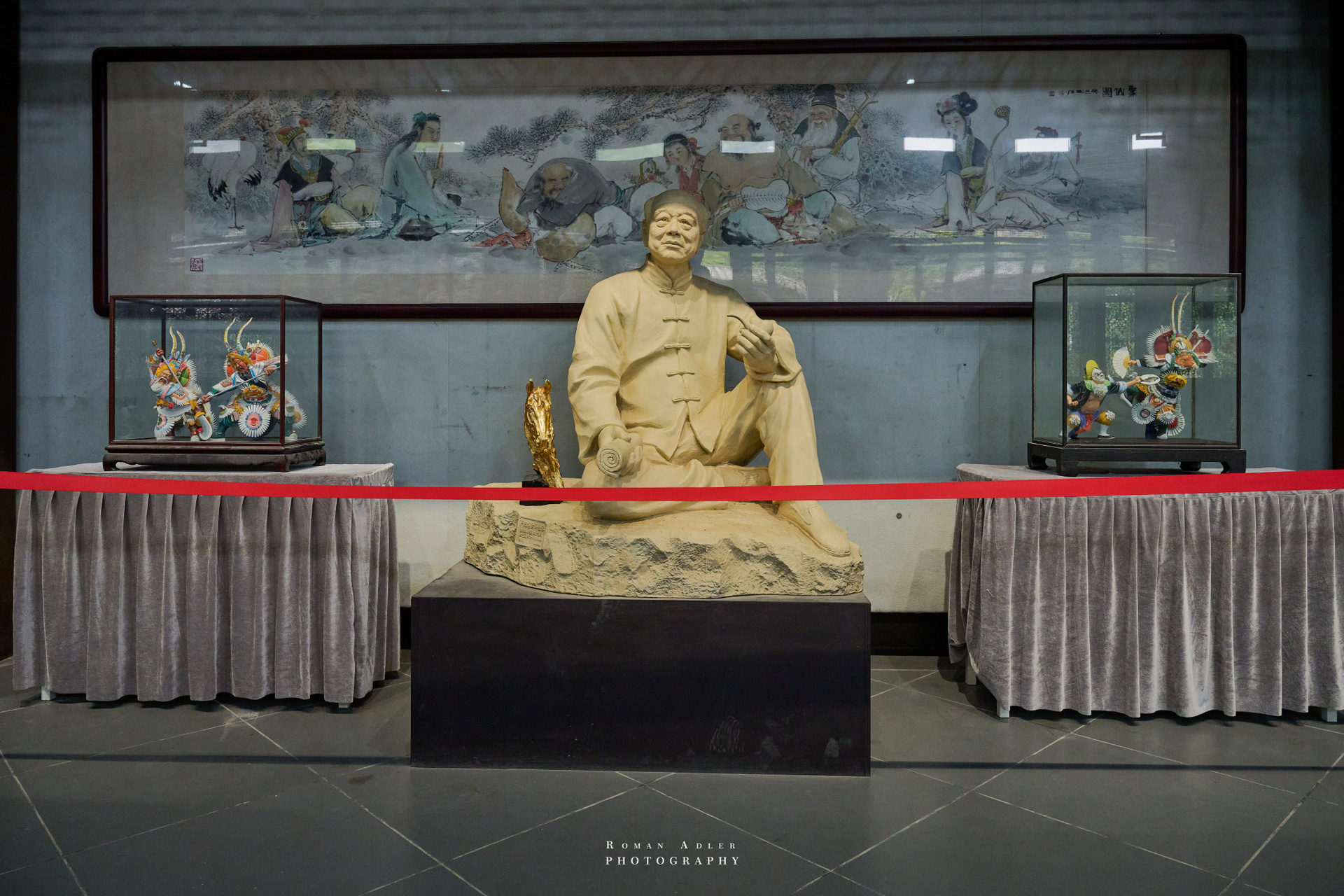
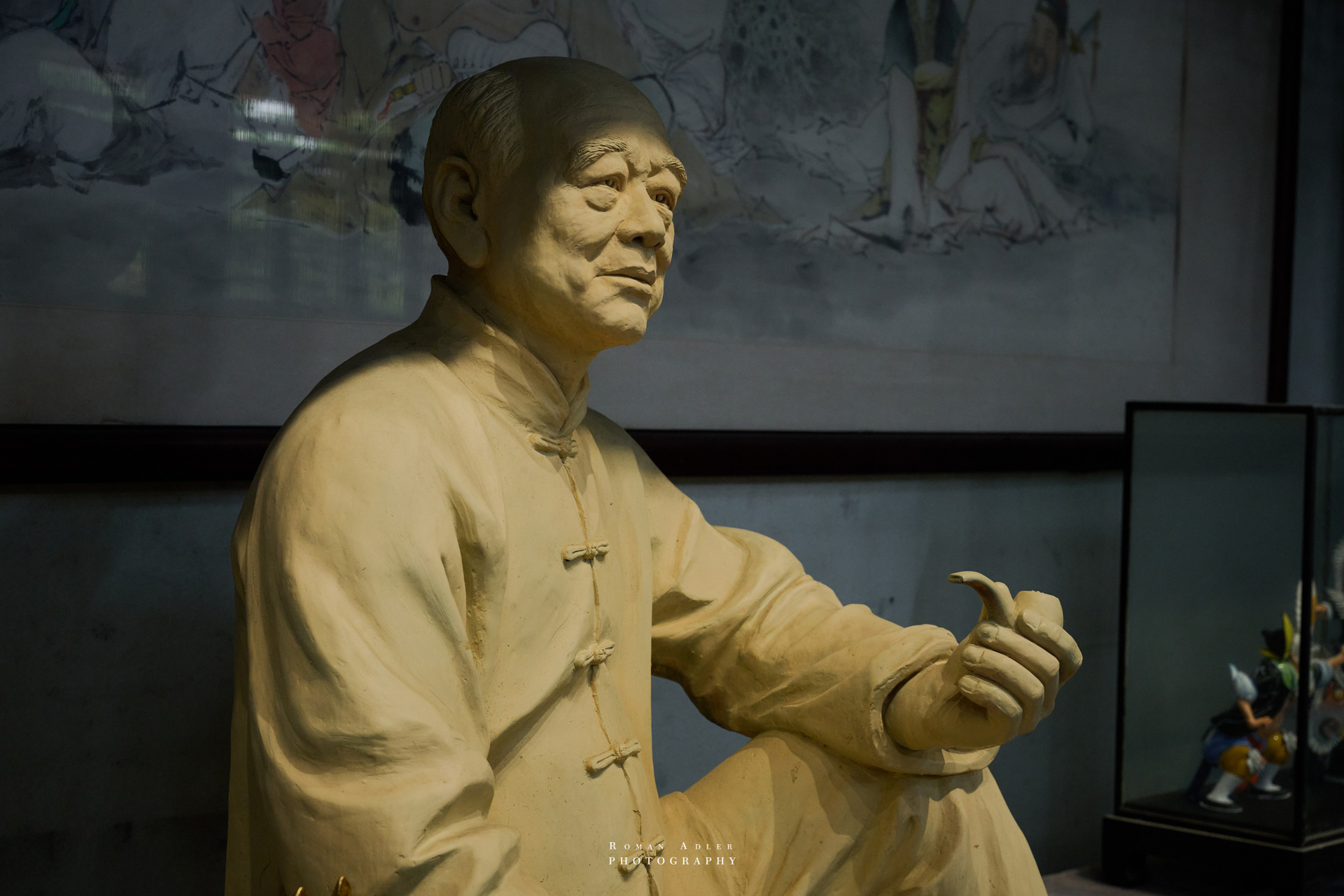
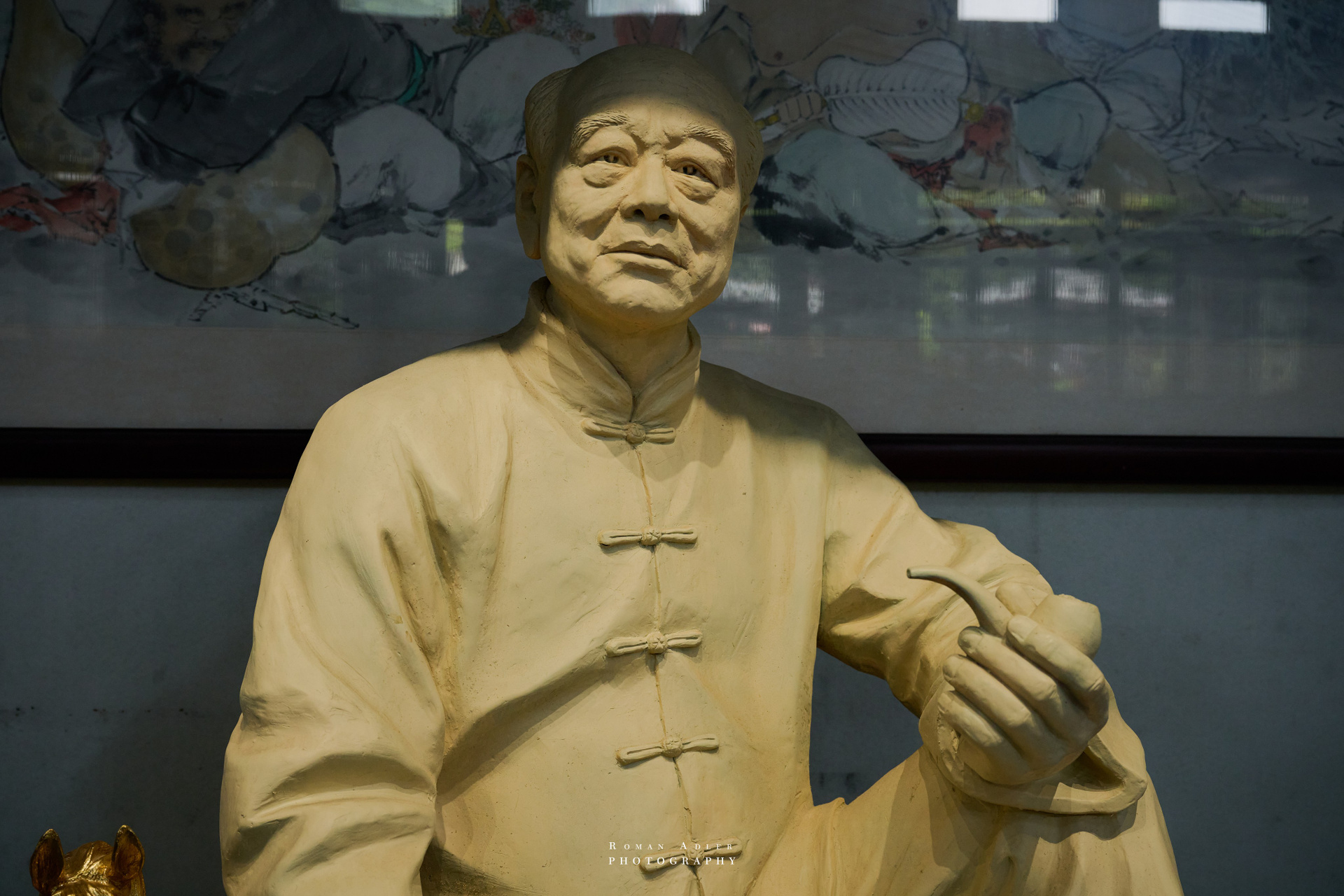
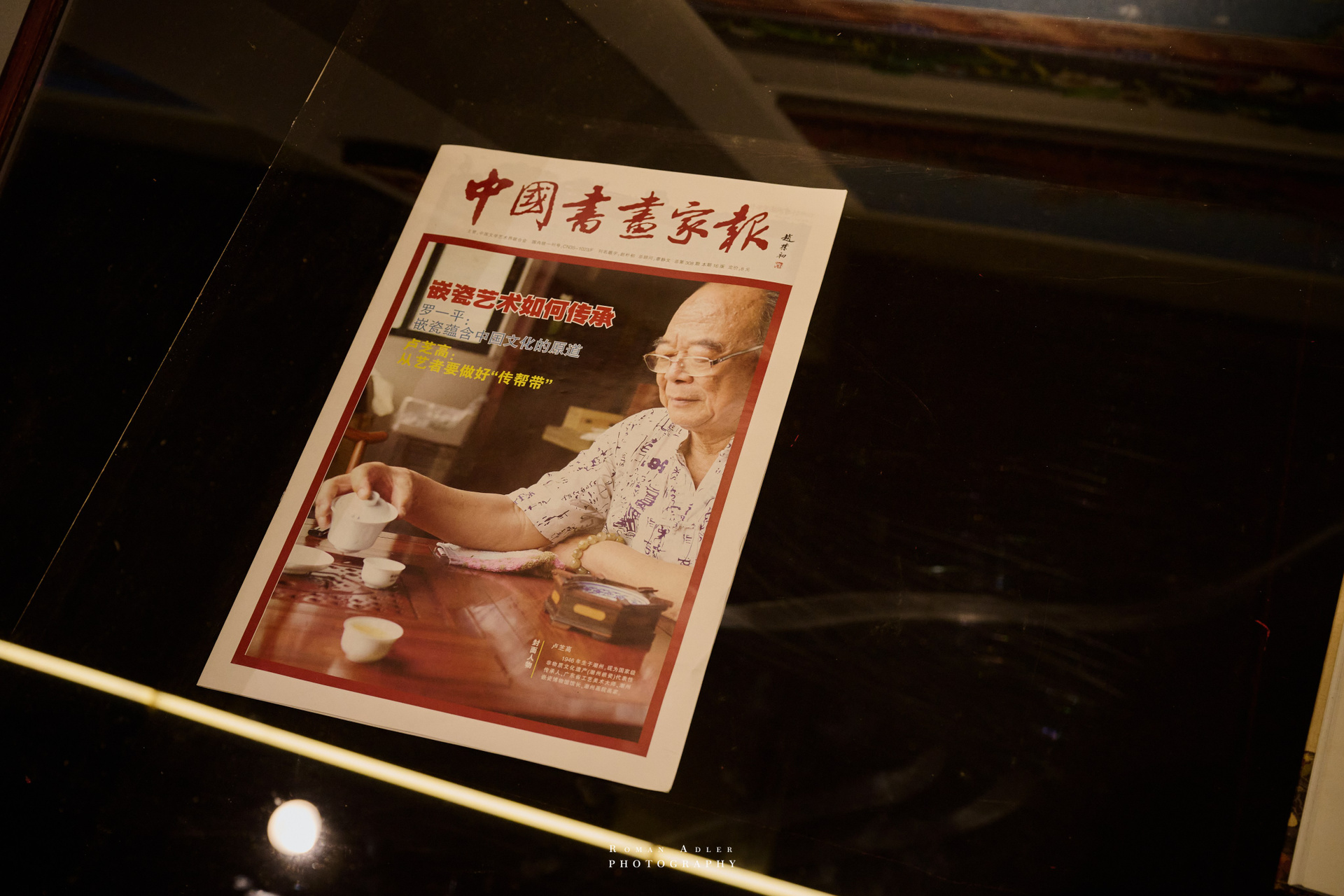
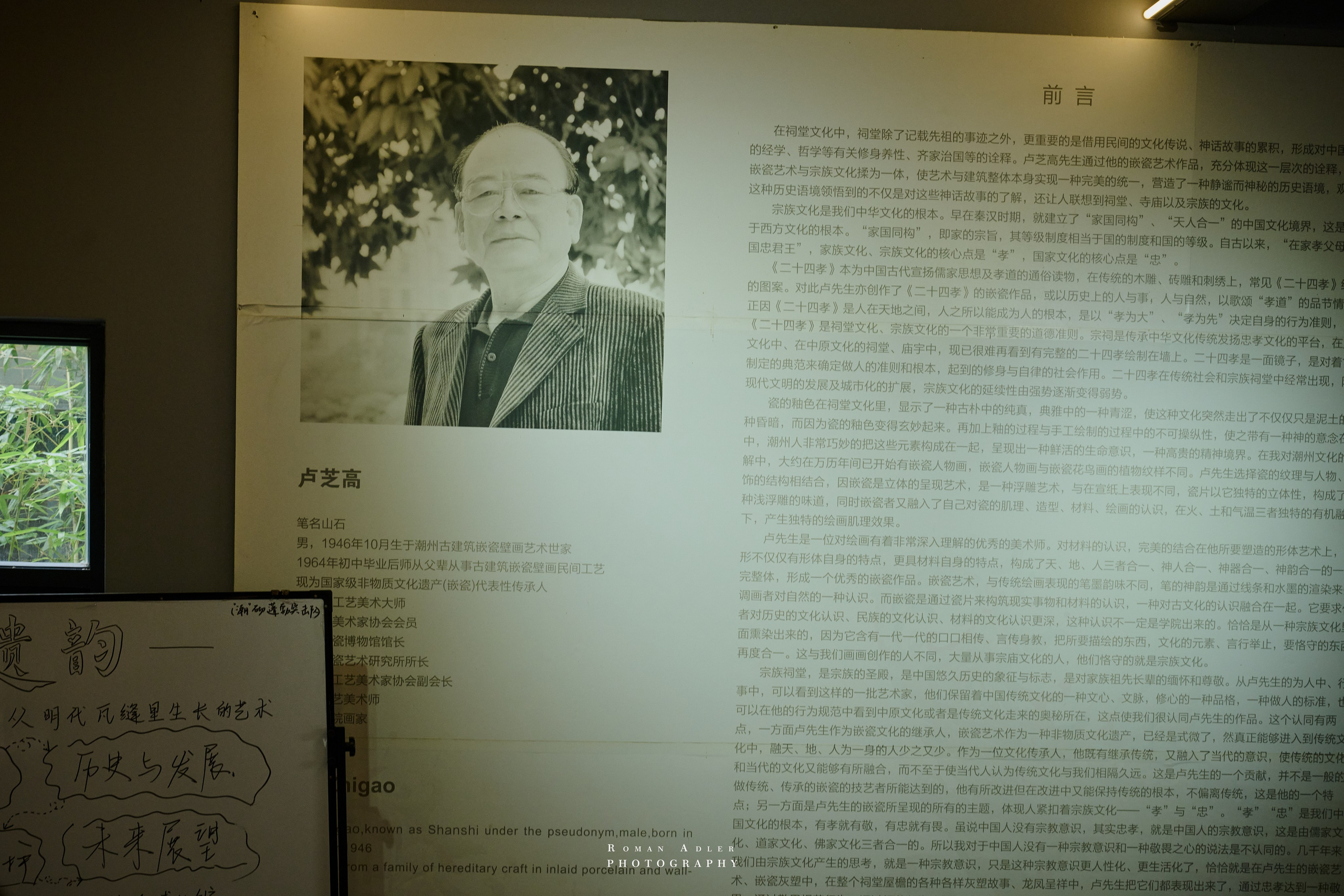
The museum was created by Lu Zhigao (b. 1946) — a fourth-generation hereditary master and a state-designated guardian of intangible cultural heritage. He began learning at sixteen and has devoted more than six decades to the craft.
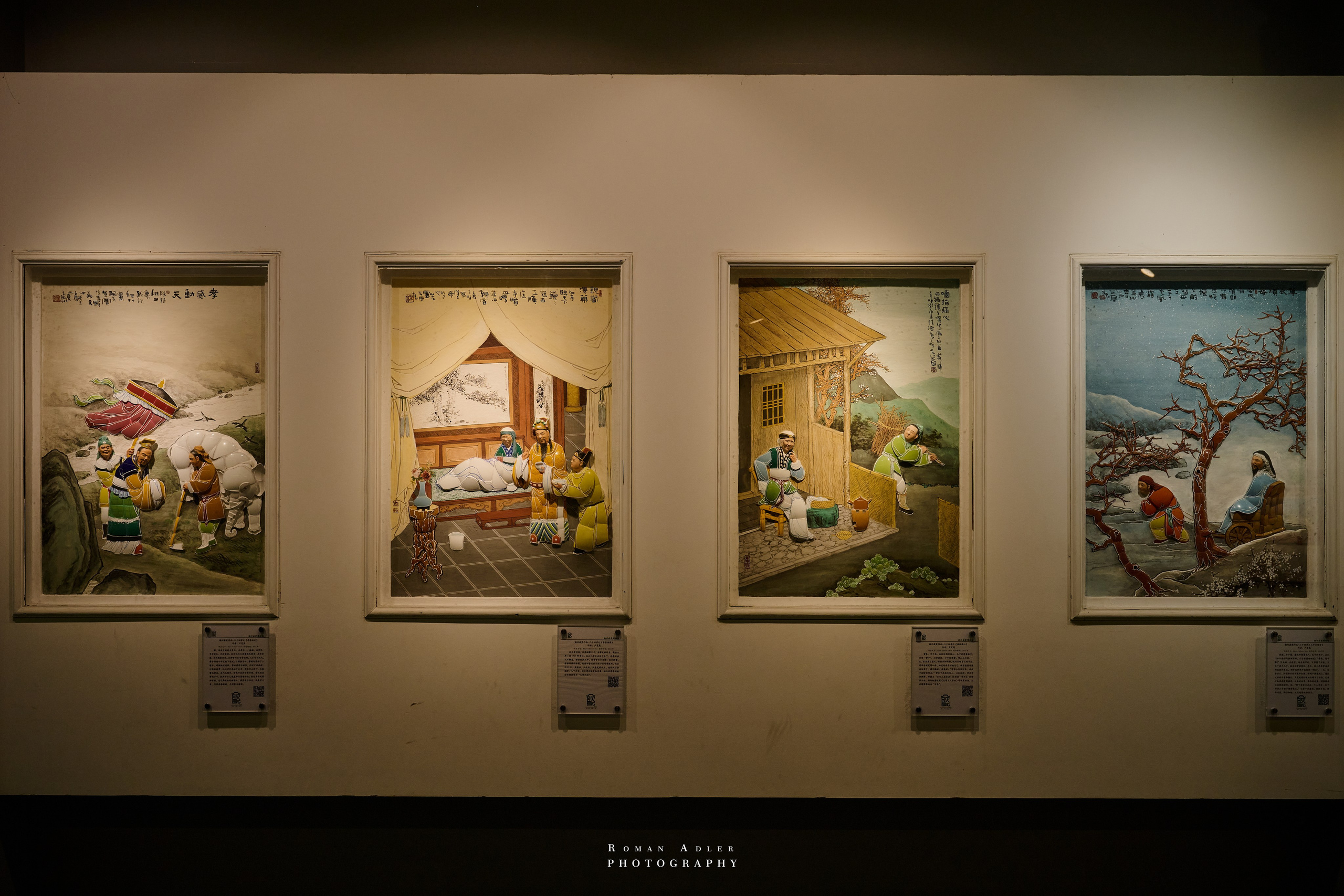
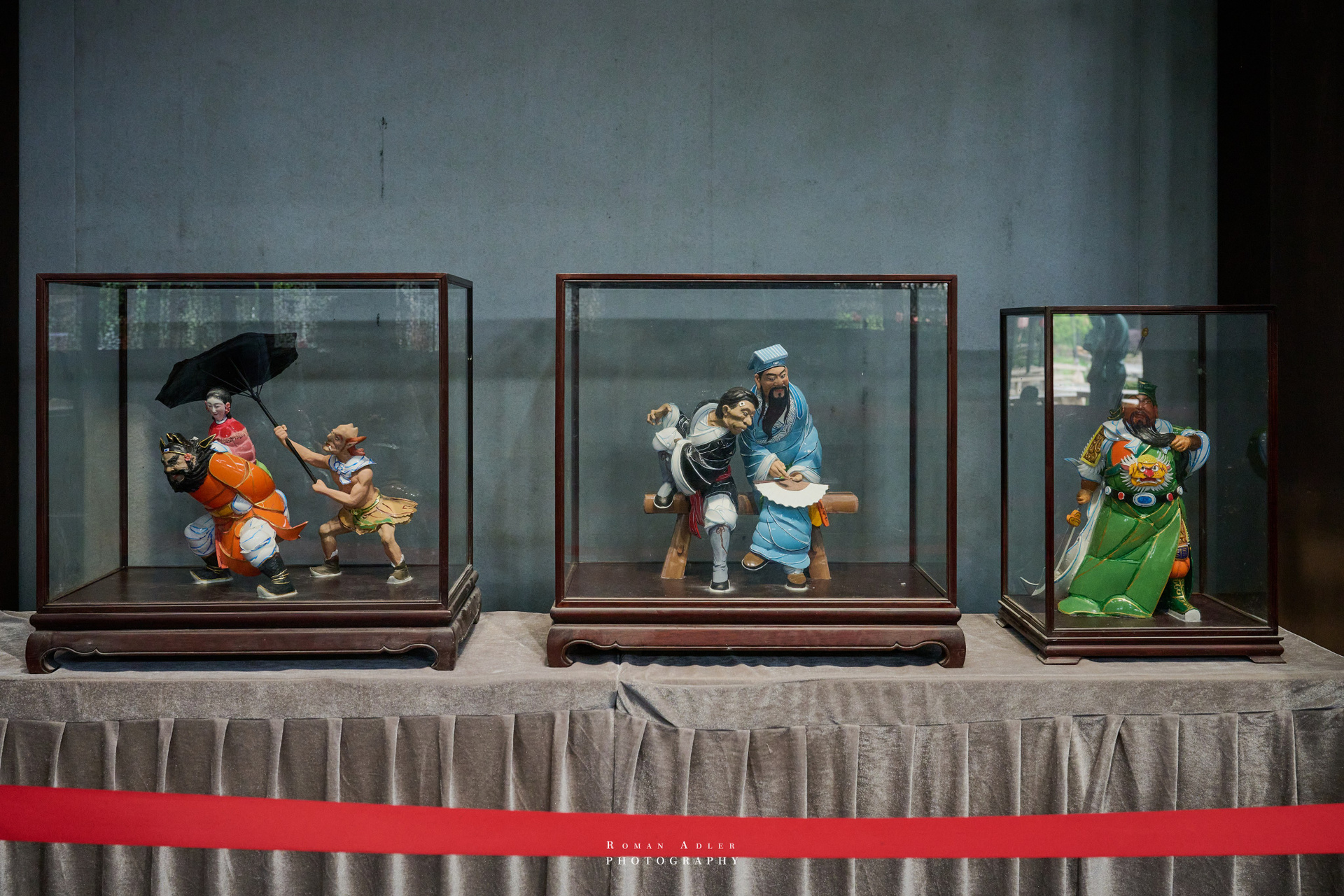
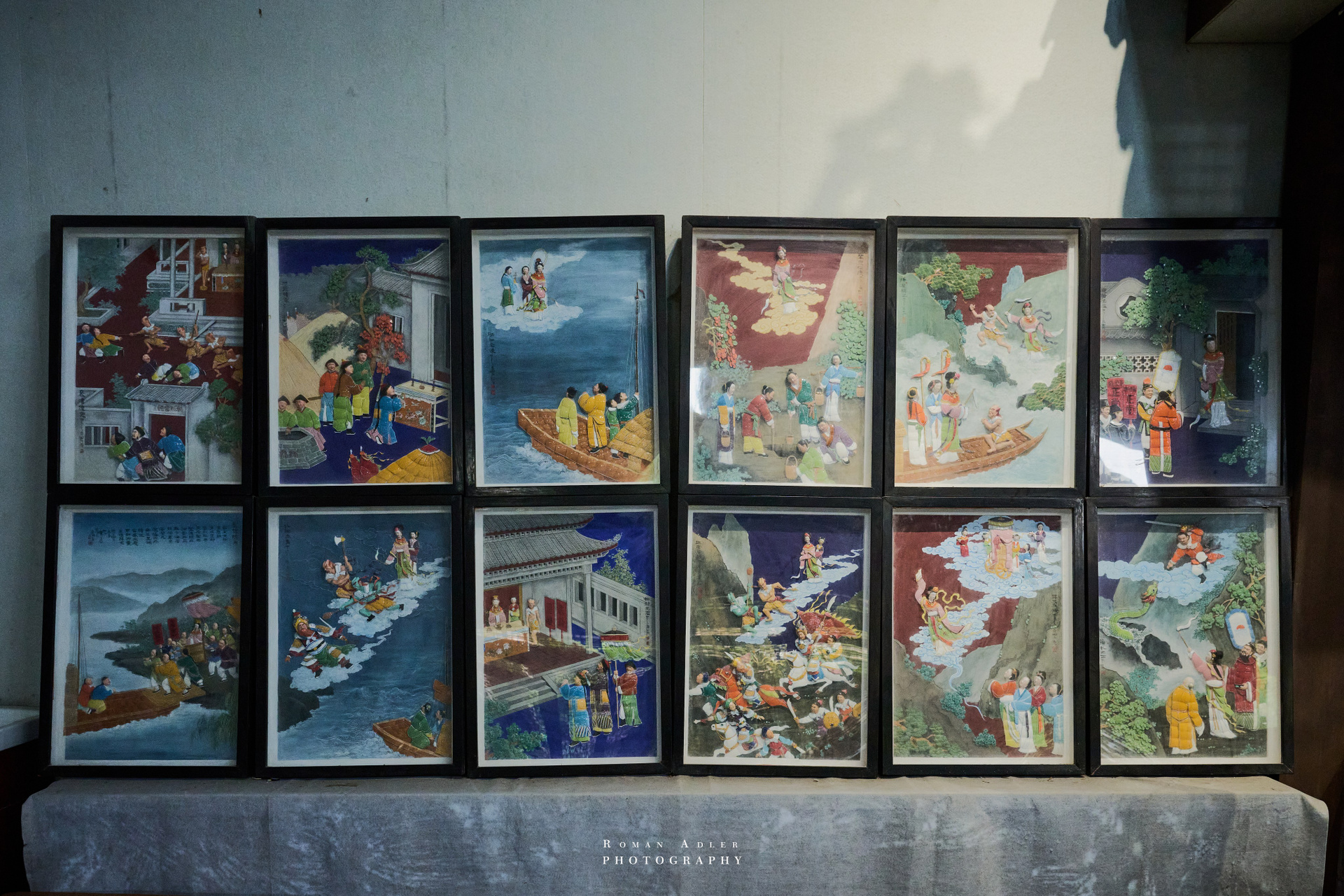
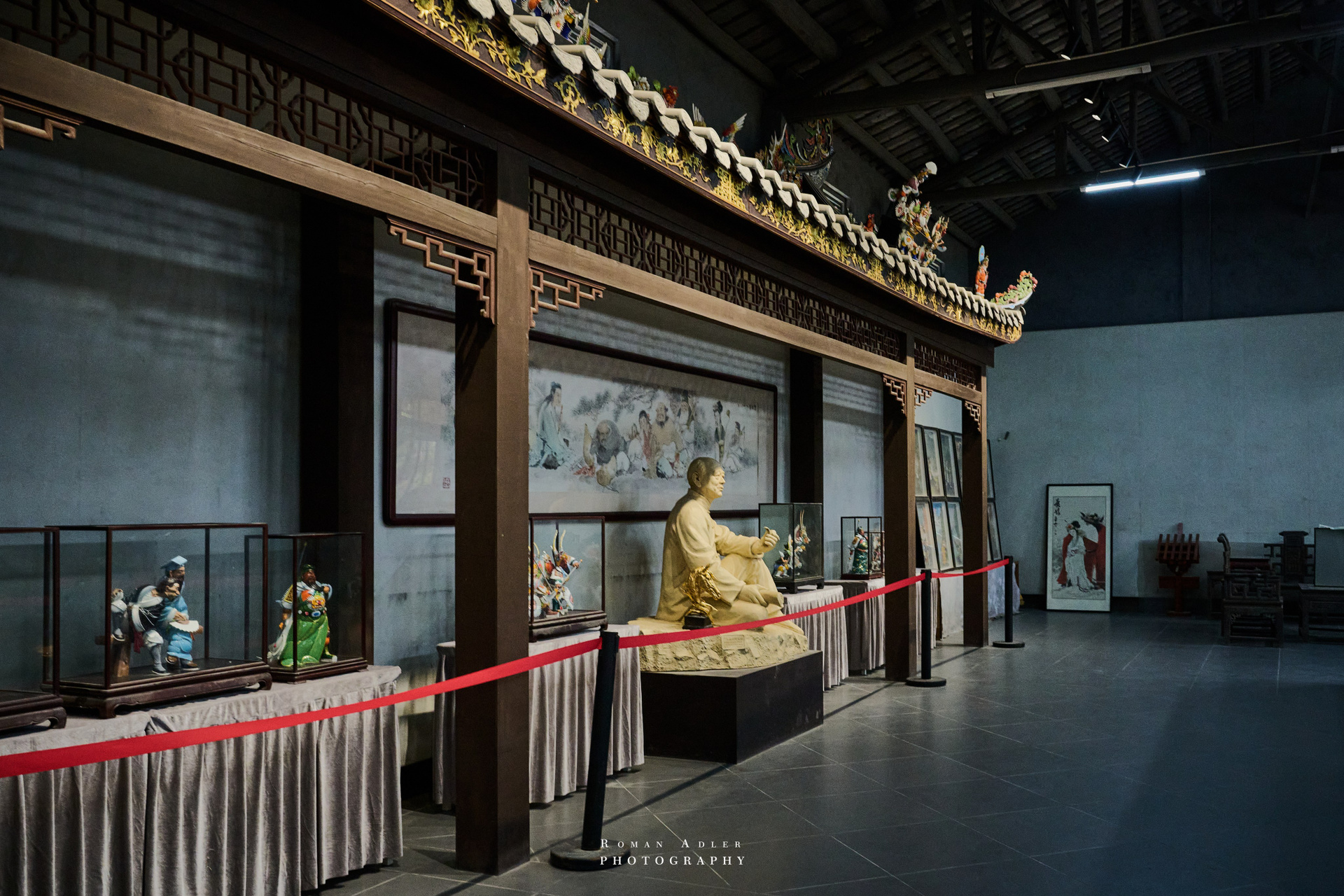
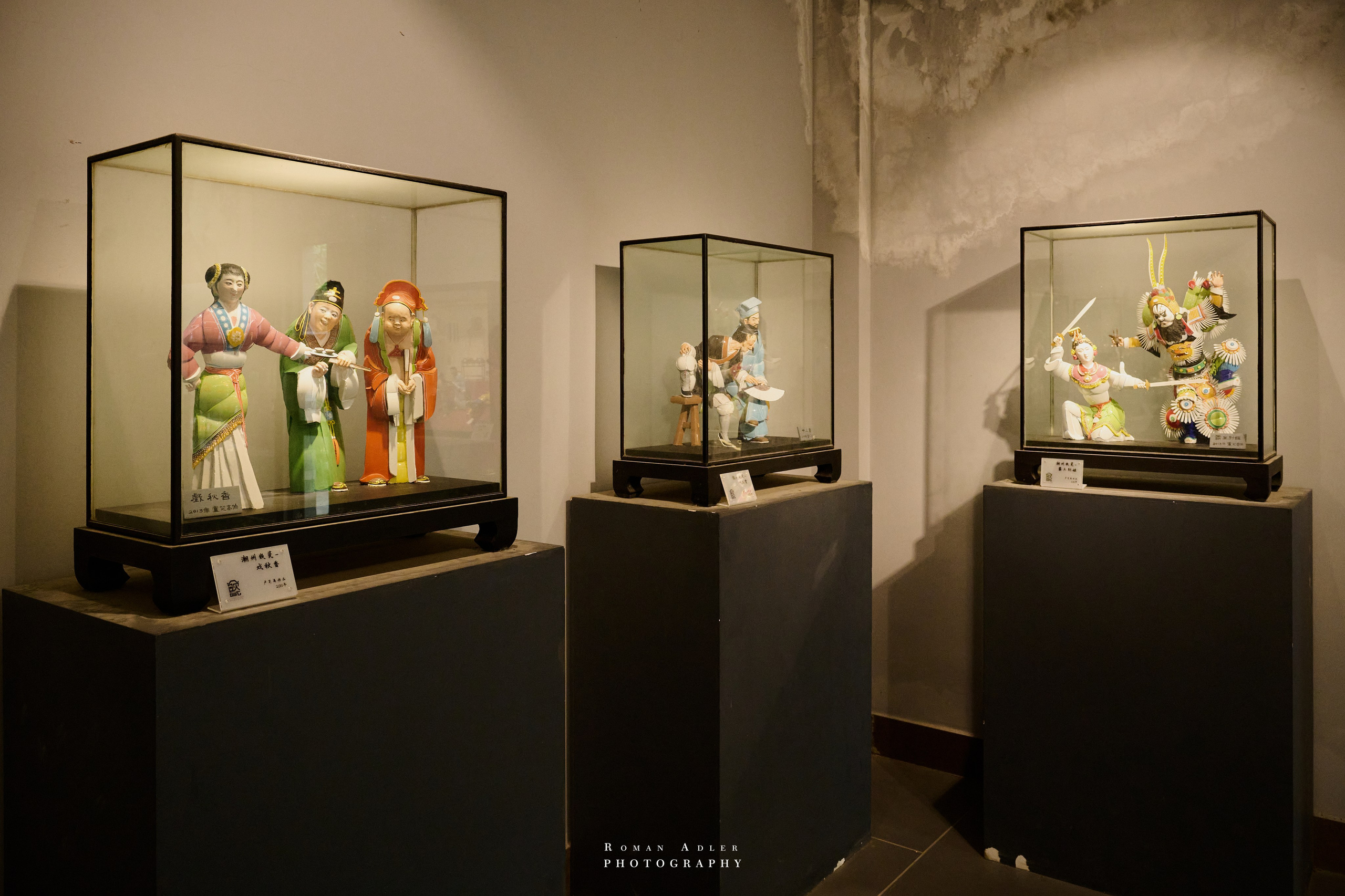
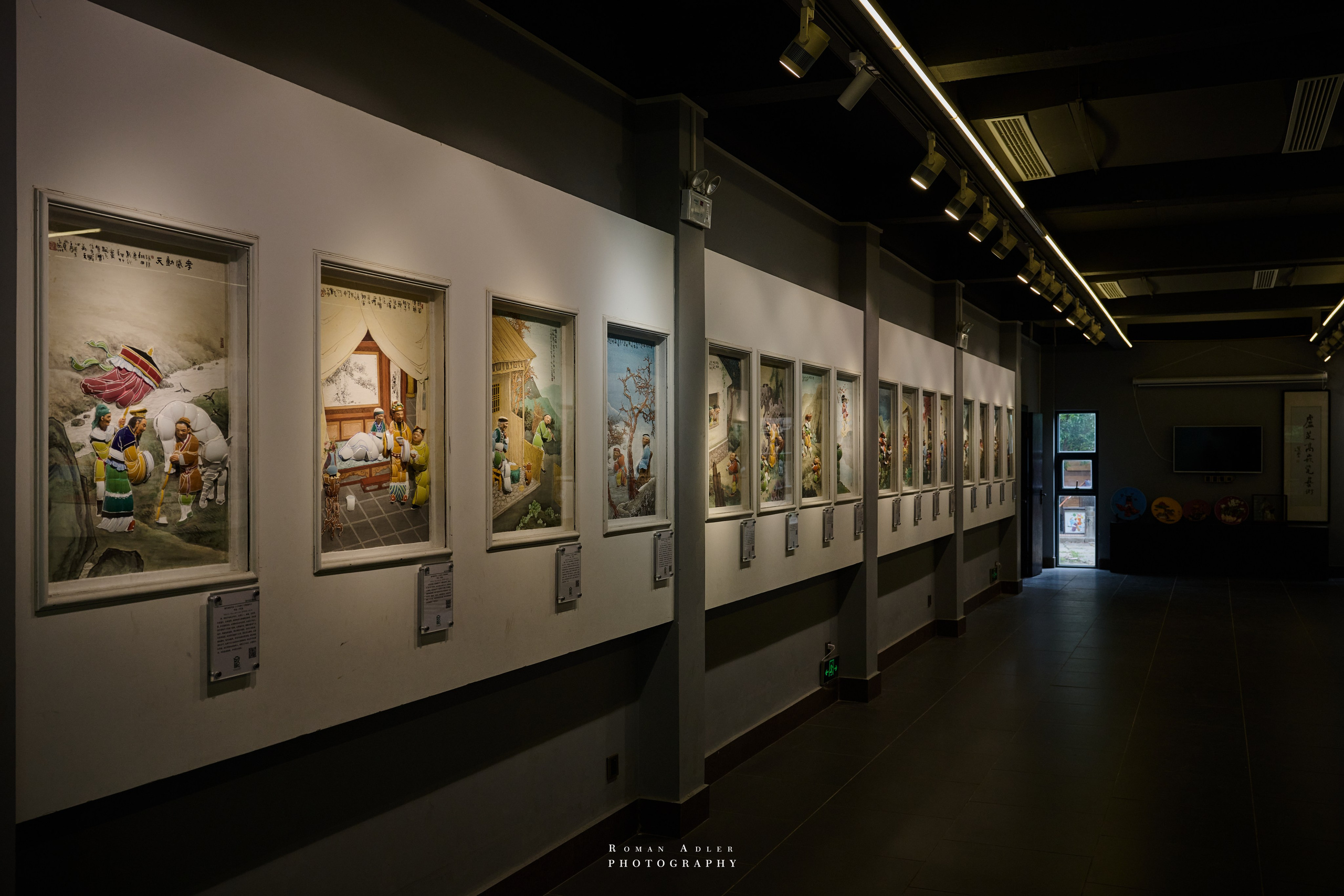
In the past, inlaid porcelain adorned only tall roofs and gables. The viewer saw it from afar, from below, looking up — as something heavenly, almost out of reach. Lu Zhigao staged a quiet revolution: he brought the technique indoors, into interiors — wall panels, three-dimensional sculptures, decorative screens. In his words, the museum exists to “show how high inlaid porcelain can reach when it descends from the heavens to the earth.”
In this gesture lies the essence of The Humans v.21. True value is not in what hovers above a person, but in what comes to stand on the same level — and does not lose its grandeur in the process.
A Roof That Weighs a Hundred Thousand Shards
The museum’s main work is “The Roof of the Chaozhou Clan Temple”: an exact reconstruction of a traditional temple roof, transferred into an exhibition hall. Dozens of figures, mythical beasts, and floral patterns crowd across it.
The master created it together with two students over eight months, using nearly 100,000 ceramic shards. Each fragment was cut and fitted by hand. The work was exhibited at the Guangdong Museum of Art and caused a sensation among art historians.
A hundred thousand shards is not a metaphor. It is a literal image of how a whole is assembled from fragments — broken cups, plates, bowls. A kitchen shard becomes a regal dragon. This, if the project’s philosophy holds, is how humanity shines most clearly: not in spite of disintegration, but through it.
How It’s Made: A Technique with No Paints
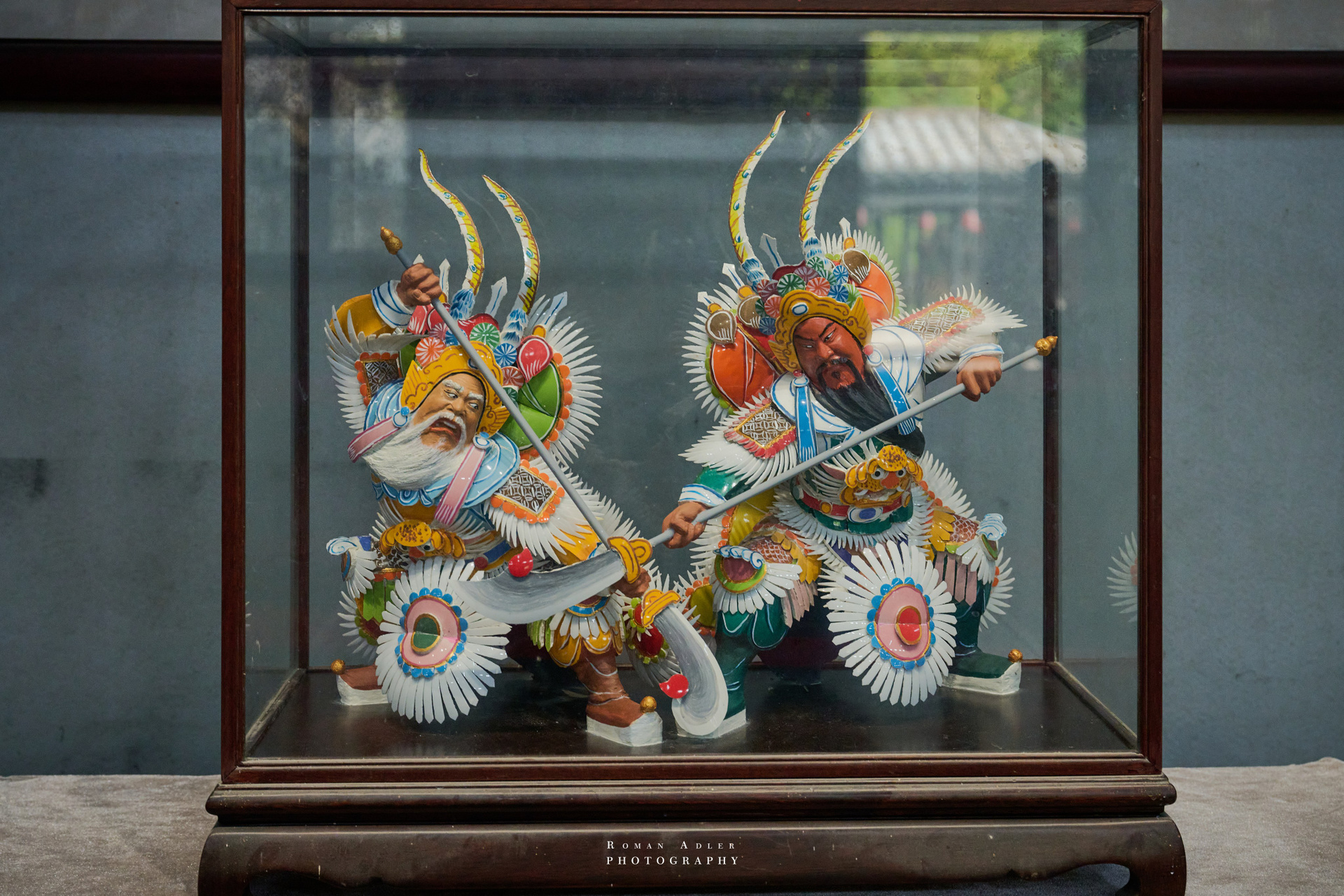
Inlaid porcelain originated at the end of the Ming dynasty (16th–17th centuries) and became one of the three principal decorative techniques of Chaoshan architecture — alongside wood and stone carving.
The essence is simple and demands virtuosity:
- Instead of paints — shards of colored porcelain cups, plates, and bowls.
- With special pliers and shears, the master chips and cuts pieces of the required shape: petals, armor, faces, feathers.
- These fragments are then glued into still-moist lime mortar with added sugarcane and other binders.
Three main types:
- Flat (平面) — a pattern on a single plane.
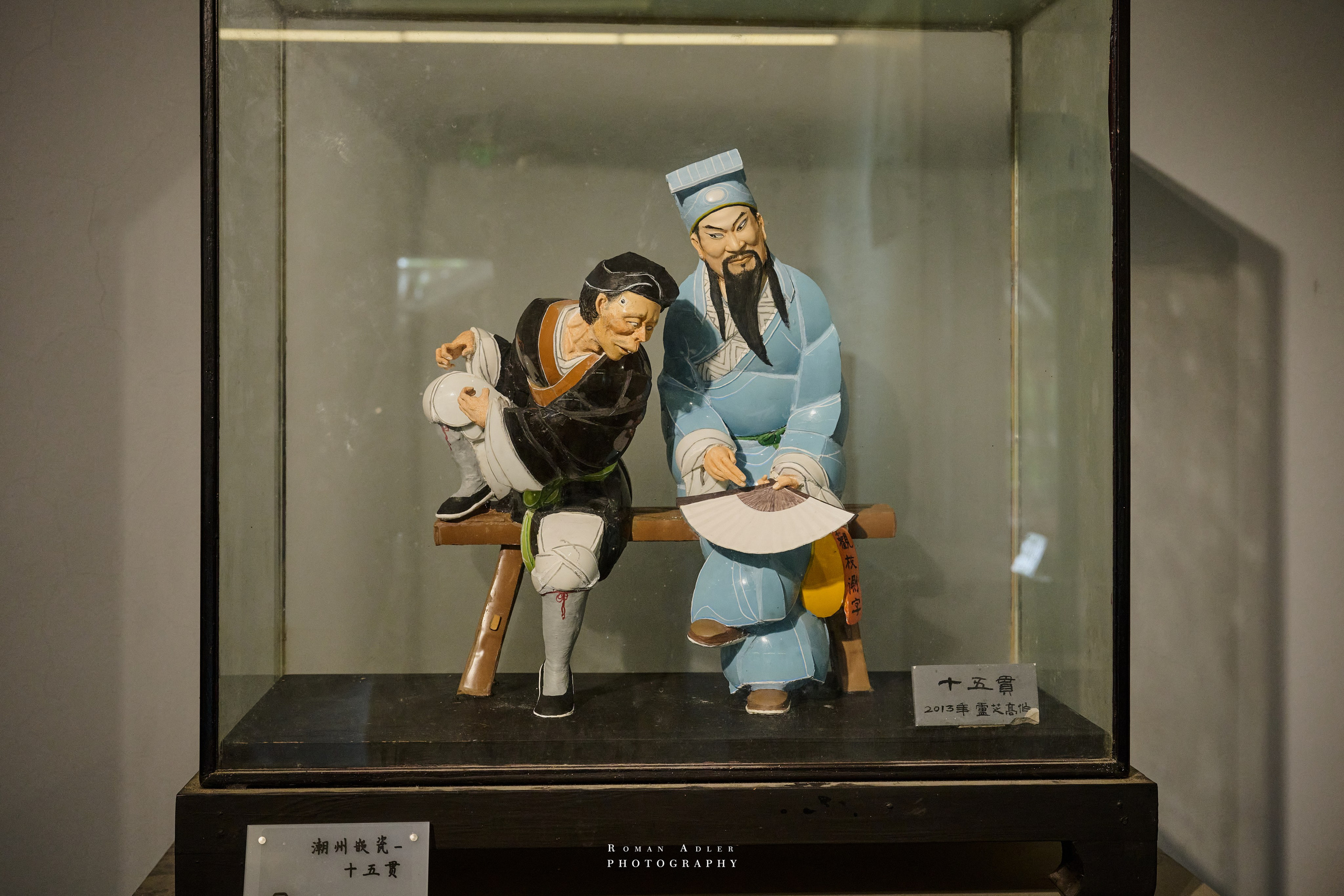
- Relief (浮雕) — three-dimensional figures projecting from the background.
- Freestanding (立体) — full sculptures standing on their own, such as dragons on roof ridges.
The glaze does not fade in the sun, and fears neither rain nor typhoons. That is why inlaid porcelain is called “ever-bright art.” It is a material that resists time — like memory, if someone holds on to it.


A Museum as a Living Workshop, Not a Showcase
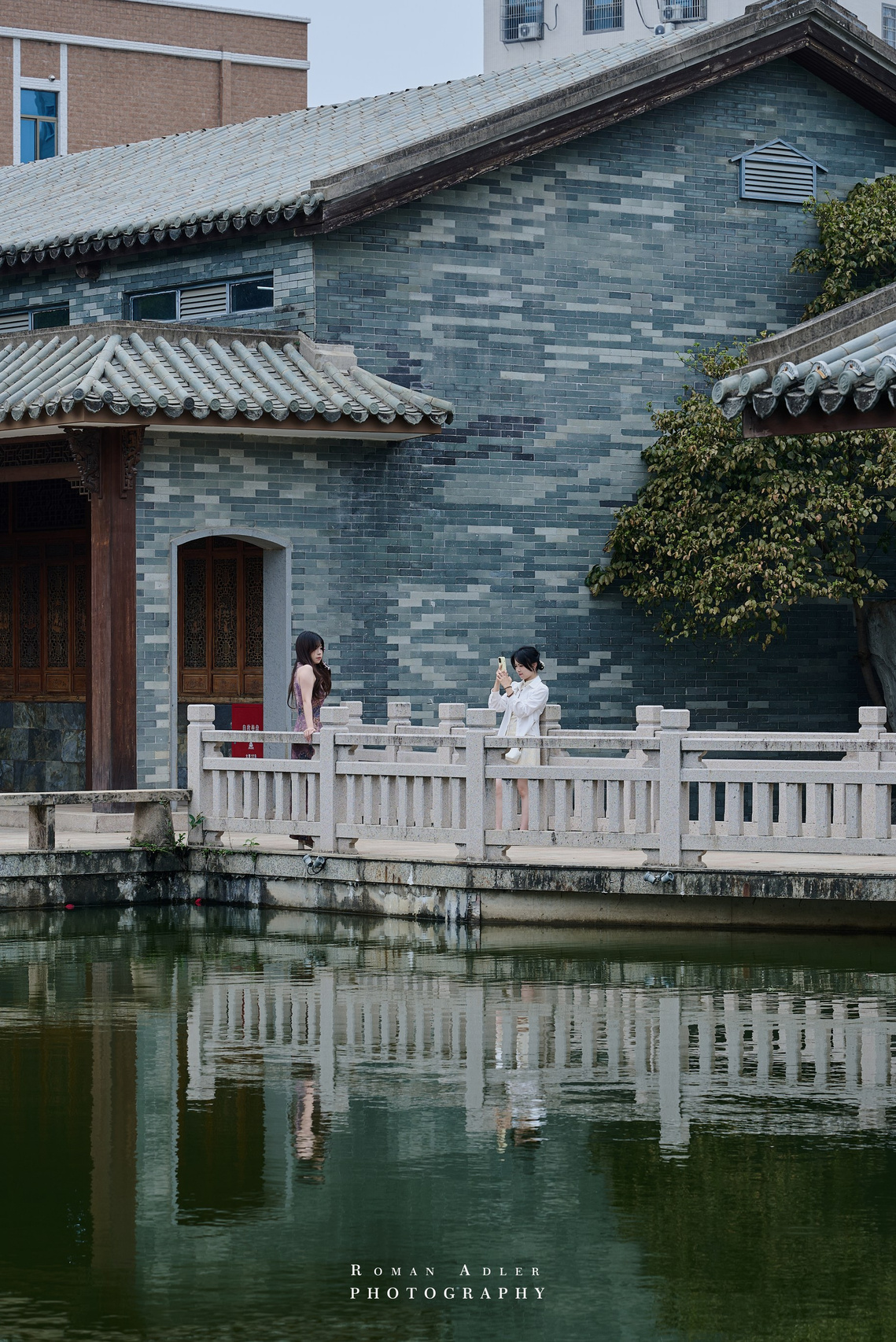
The museum is located in Humai Village, Jinshi Township, Chao’an District, Chaozhou, Guangdong Province. It was founded in 2013 on the grounds of the private estate “Jinyu Garden” and occupies about 4,600 square meters. This is not a state institution but a personal project of a master who turned his home into an open cultural space.
Inside are four exhibition halls, a history room, a workshop, and a courtyard in the Jiangnan garden style. The collection numbers 159 items. But the main thing is this: here you can see new works being born. In a special area, students and apprentices work; you can watch the process from trimming the shard to final assembly. Sometimes visitors are allowed to try their hand — cut a simple shape and glue it into a small blank.
This is popular with families with children and with teachers who bring entire classes. A photography tip: the best light for shooting glossy glaze is morning (9:00–11:00) or evening (15:00–17:00), when the sun strikes at an angle.
Practical Information
- Address: Humai Village, Jinshi Township, Chao’an District, Chaozhou, Guangdong Province (landmark: Humai Middle School).
- Hours: usually Tuesday to Sunday, 10:00–17:30; closed Monday (better to confirm before traveling).
- Admission: free.
- Getting there: the museum is 3 km from Chaozhou Station (high-speed rail). Best by taxi or DiDi.
- Recommended time: 1–2 hours.
Information on hours and tickets is current at the time of writing; before traveling, it is best to check the museum’s official sources.
A Museum as a Living Workshop: Touch Instead of Contemplation
Most museums teach you to look. This one teaches you to see hands.
In a special area, students and apprentices work — and you watch not an “exhibit” but a process: a piece is chipped from a shard, fitted, laid into still-moist mortar. From trimming to final assembly — the whole chain before your eyes. Sometimes visitors are allowed to try: cut a simple shape and glue it into a small blank.
Herein lies the quiet difference between a museum-workshop and a museum-showcase. Glass separates; the hand connects. A culture that can only be looked at gradually turns into scenery. A culture that can be repeated stays alive. And it is not that a visitor will become a master in half an hour. It is that for half an hour he becomes part of the chain by which the craft is passed from hand to hand.
This is especially clear with children. They do not yet know that qianci is “heritage.” To them it is simple: break a cup and glue on a petal. And that is precisely how a craft survives — not through reverence, but through play, through repetition, through the hand that remembers before the mind can name it. Teachers bring entire classes here — and that too is part of the code: transmission goes not from showcase to viewer, but from person to person.
The photography tip here sounds almost like philosophy: the best light for shooting glossy glaze is morning (9:00–11:00) or evening (15:00–17:00), when the sun strikes at an angle. The gleam of glaze, like meaning, reads best not head-on but from the side — when light falls on an edge and reveals what seems flat in a direct gaze.
How to Enter This World
The museum is small, and it is easy to get in. But a few things are worth knowing in advance so you don’t walk past the main point.
An hour or two is enough to walk through the halls. But if you want to understand, not just “view,” linger by the workshop. There time moves differently: slower than in the halls, and faster than it seems.
Information on hours and tickets is current at the time of writing; before traveling, it is best to check the museum’s official sources.
The Shard That Became a Dragon: A Human Story
This museum is not a collection of beautiful things. It is the story of a man who decided that his ancestors' craft must not die.
Lu Zhigao invested in it not only money but his entire life. And when you stand before his works and see how a kitchen shard becomes a regal dragon, you understand a simple thing: true mastery knows no age and fears no time. It needs neither grand titles nor glass display cases. It needs only a hand that keeps working.
In the logic of The Humans v.21, this is the main point. The code of humanity is not written in bronze or marble — it is written in the stubbornness of hands, in one person’s decision not to let die what came before him. Monuments preserve the past. People continue it.
And here is what else matters: the museum is hidden behind an unremarkable gate. The most essential things are often arranged this way — they do not shout about themselves, do not stand in the square. Behind a plain entrance turns out to be a whole world, where every shard tells its story, and the roofs have been playing their performances for four centuries running. A theater without an audience? No. The audience is here — it is us, if we raise our heads.
A Hundred Thousand Shards at Arm’s Length
The museum’s largest exhibit — the reconstruction of the temple roof — is assembled from nearly 100,000 ceramic shards. And each of them was cut and glued by hand.
This is the only museum in China where “roof art” can be examined at arm’s length.
A detail, it would seem. But in it lies a whole philosophy. We usually approach the sacred at a distance: from below, from afar, reverently. Distance is a form of respect. Here, distance is abolished. The roof — what for centuries was heavenly — is brought down to the level of eyes and palms. And in this closeness emerges what cannot be seen from below: the seam, the cut, the trace of glue. The trace of a hand.
And then it becomes clear: the code of a nation is not in the ideal image of the dragon. It is in the seam by which that dragon is assembled. In the place where you can see that the whole was made by a human being, piece by piece, by hand, and that behind every piece stands someone’s effort. Come closer. Examine the seam. There the code is written.
Chaozhou Inlaid Porcelain Museum
All photographs from this series are collected in a separate gallery. Follow the link below — there you will find a photo tour and details that cannot be conveyed in words.
This publication is part of the research project The Humans v.21. Act V, “A Russian Gaze. China.”