Ontology of Differences, or the Alchemy of Care:
Why Love is an Act of Resistance to Chaos
“Precisely because the outside world was falling apart, he was determined to maintain his inner sense of order. It was the last line of defense against external chaos, a small personal rebellion.” — Sándor Márai
We are thrown into the river of time. Every morning washes away who we were yesterday, leaving only an illusion of continuity. The Stoic inside me smiles wearily: I spend colossal amounts of spiritual energy resisting the current or blindly surrendering to it. And I forget that the only territory under my control is my inner consent to the Logos of the world. Everything in this Universe is finite and changeable. Only Change itself claims eternity.
But who are we in this whirlpool?
The theological aporia lies in our status: we carry within us Imago Dei — the Image and Likeness. But how can we grasp the greatness of the Architect if our mind stalls before the mystery of the simplest cell or the majesty of a flea? How can we become like the Almighty if we are powerless even before the next moment of our own breath?
Here, science and the pride of reason fall silent, giving way to gnostic insight. We cannot comprehend the Creator through power or intellect. We can only draw closer to Him through emanation — through how He manifests in the multiplicity of this world.
The world is not monolithic. It is woven from endless differences, distinctions, and shades. This multitude is the scattered sparks of divine light, hidden in matter. And here, at the crossroads of Stoic humility and theological awe, the only worthy answer is born.
That answer is Love. But not the love that is momentary passion or blind attachment. Love in its highest, ontological sense is Care. As Martin Buber wrote: “Love is not a feeling. It is the responsibility of an I for a Thou.”
To love differences means to recognize the sacredness of otherness. To cherish diversity means to preserve the Pleroma (fullness) of the world from decay. In a world that, by the laws of physics, strives toward non-existence, any act of care is a quiet rebellion. It is the creation of an island of order and meaning.
When we learn to love the world in all its dissimilarity, we fulfill our main function: we become “gardeners” of the Creator. We take upon ourselves that small fraction of His power that is within our reach — the power of preservation and value. To keep ourselves and the space around us pure is an act of resistance to chaos. It is a way to say “yes” to Life, not demanding eternity from it, but granting it meaning in every specific moment.
The Alchemy of the Gaze: From “It” to “Thou”
“All real living is meeting.” — Martin Buber
How does this philosophy come alive in my photography? After all, my camera by its very nature is an instrument of alienation. By aiming the lens, we turn the living world into a frame, an image, an object of consumption.
This same thought of Buber’s about love is directly linked to his concept of two types of relationships. The first is “I-It”. This is the world of functions and use. In the modern world, we are used to looking at people as “It”: statistics in the news, traffic in apps, a resource for achieving goals. The second type is “I-Thou”. This is the world of meeting, dialogue, and recognition of the absolute value of the other.
My project The Humans v.21 is an attempt to build “I-Thou” relationships through the lens. Here the camera ceases to be a tool of fixation and becomes a bridge. At the foundation of this bridge lies the “Rule of the Duet” and a complete rejection of value judgments. I do not explain “who is right” in this world. I do not impose my views. I am simply present, allowing these meanings and the person themselves — to manifest.
I cannot judge, I can only preserve by capturing the fragility of the moment. I am the one who seeks universal humanity in the “other” and the familiar, in a foreign culture, in unfamiliar faces, in events, in moments. I am a Witness and a Wanderer at the same time.
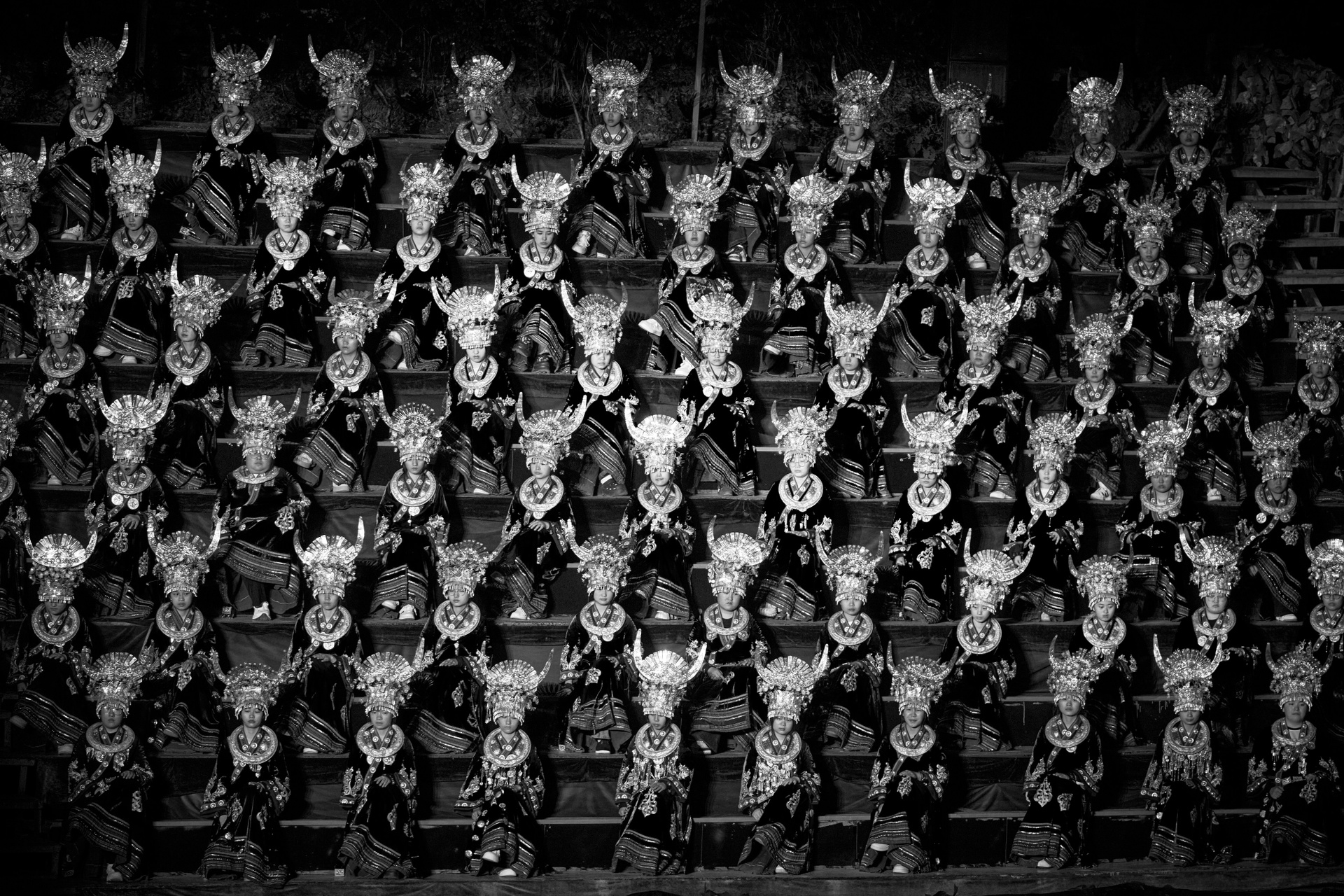
This ontology permeates all Acts of the project. In Act I “Planet Without Wars, ” I learn to say “yes” to Life in every specific moment (Carpe Diem Amor Fati). In Act III “Children Always Remain Children, ” I see absolute, unbiased purity, where the boundaries of adult conventions are erased. In Act V “Russian Gaze. China, ” I face the recognition of the sacredness of otherness, learning to see sparks of divine light in a foreign, incomprehensible culture.
Maps don’t breathe. This is an important reminder. No geopolitical schemes and philosophical theories can convey the pulse. But photography breathes. In my frames, silence coexists with chaos, and in conflict zones, life does not stop. In this confrontation, we see the triumph of the Pleroma over entropy.
Preserving Fullness
Why do I need all this?
I don’t just photograph people. Through my camera, I try to preserve the fullness of this world. Every frame, every moment, every event captured with love is my choice and my personal act of resistance to decay.
For me, to Love is the simplest key to understanding Life. It is not an emotion; it is an action of the spirit.
Yes, we cannot stop the river of time, but we can carefully scoop some water from it so that it does not flow away from us without a trace. We cannot save the world from entropy, but we can leave bright traces of presence in it. Our own, or our shared ones.
This publication is part of the research project The Humans v.21.